


RIVOIRA
Kissabel®
Kissabel – Colour, innovation and identity
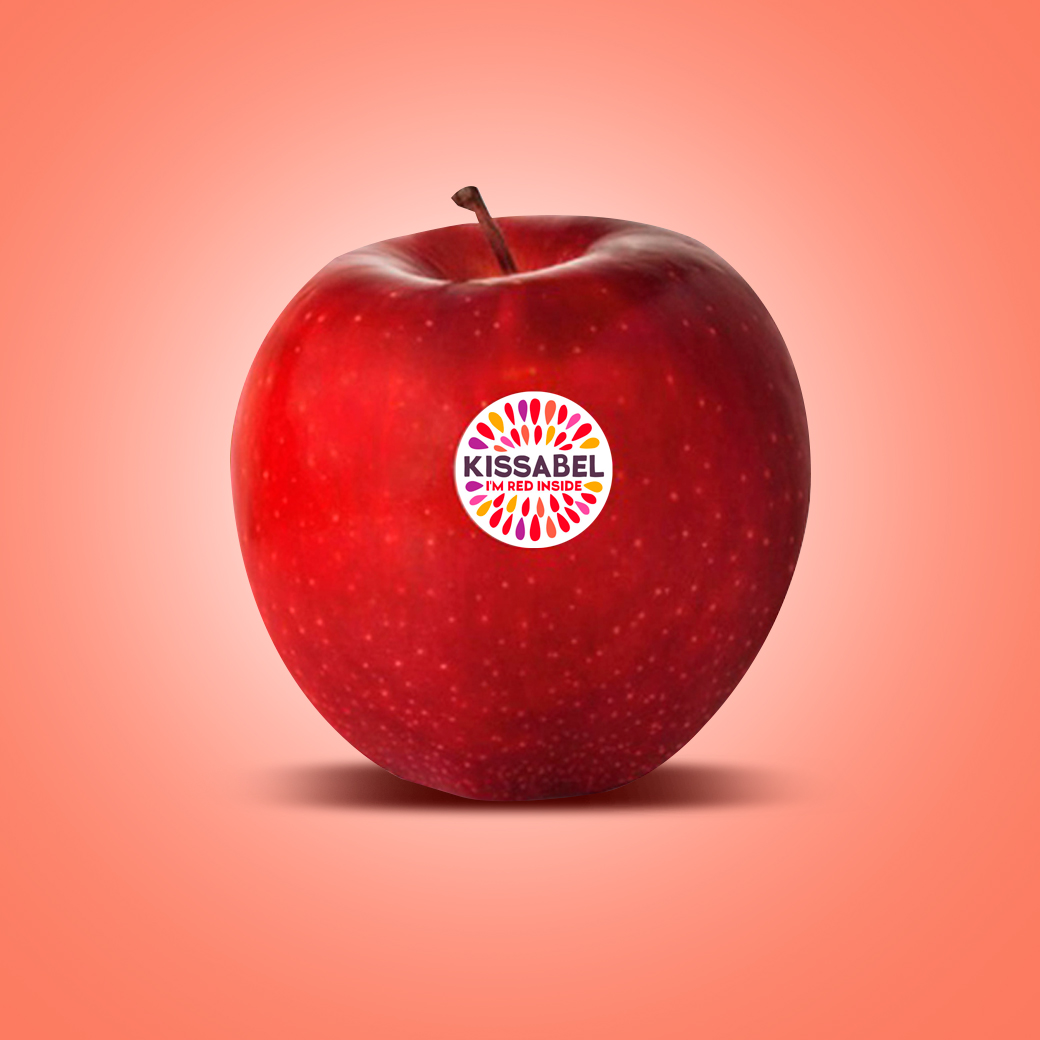
Kissabel® is an innovative and surprising apple, instantly recognisable thanks to its naturally red flesh and its vibrant personality.
It is the result of an international research programme that has created a truly unique fruit, combining visual appeal, naturalness and a completely new flavour profile.
The origins of a revolutionary project
The Kissabel® project was launched over twenty years ago in France, through carefully selected crosses between premium apples and red-fleshed varieties.
After a long selection process, the first commercial orchards were planted in Europe in 2016, and just one year later the first Kissabel® apples reached the market.
A young story that has already become a symbol of innovation and forward-thinking within the international fruit sector.
A true story, written by nature
I am Kissabel®
Red on the inside
Origin and development of the project
The brand, officially launched in 2017, is promoted by the international group IFORED, which brings together leading innovative apple growers from all five continents.
In Italy, Rivoira Giovanni & Figli S.p.A. participates through the Novamela consortium and plays a key role in the project.
The company established its first pilot orchards in 2015, has operated commercial orchards since 2022, and holds exclusive worldwide rights for production and distribution.
A new frontier of flavour
Kissabel® represents a new frontier in apples: a range of naturally grown fruit that is visually striking and exceptional in taste.
Kissabel® apples differ in flesh colour, skin tone, flavour profile and harvest period.
Three varieties, three personalities
There are three distinct varieties, each with its own character:
-
Kissabel® Red: bright, fresh and crisp, with an intense flavour enhanced by notes of forest berries.
-
Kissabel® Orange: crisp and juicy, with red-pink flesh and a perfectly balanced sweet–tart profile.
-
Kissabel® Yellow: featuring yellow skin with lenticels, it surprises with sweet flesh and delicate pink hues.
